Reimagine DOTOCOZA
Transforming Nedbank’s Digital Front Door into a Customer-Centred Growth Platform.
Executive Summary.
The Reimagine DOTCOZA programme was a strategic transformation initiative aimed at reinventing nedbank.co.za from a traditional corporate website into a modern digital product platform that could drive commercial growth, improve customer servicing, and strengthen the Nedbank brand. Rather than treating the website as a collection of pages, the programme reframed it as a continuously evolving customer experience ecosystem.
The vision was ambitious:
Make nedbank.co.za the exemplar of the Nedbank brand and the most effective and efficient digital sales and servicing channel.
The Challenge
A Website Built for Yesterday’s Customers
Customer expectations had evolved dramatically. Increasing numbers of clients were turning to digital channels for advice, support, product comparisons and applications, yet the existing experience was struggling to keep pace. The platform was slow to evolve, difficult to govern and lacked the flexibility needed to respond to changing customer behaviour.
Several key lessons emerged:
Previous delivery had followed a "big bang" launch approach.
Mobile-first thinking came too late in the design process.
Site governance was limited.
Customer needs were only fully understood near the end of delivery.
The platform lacked a sustainable model for continuous improvement.
The consequence was a fragmented digital experience that underperformed as both a sales and servicing channel.
The Opportunity
The team recognised that replacing technology alone would not solve the problem.
DOTCOZA required a complete rethink across:
Customer experience design
Information architecture
Content strategy
Digital governance
Ways of working
Measurement frameworks
Technology platforms
Most importantly, the organisation needed to move from a project mentality to a product mindset, where experiences were continuously measured, improved and optimised.
The Vision
Outside-In, Inside-Out Transformation
The vision centred around two complementary outcomes:
Web Experience Vision
Create a highly relevant, frictionless and personalised customer experience that becomes more valuable the more customers use it.
Web Operations Vision
Establish the people, processes, culture and technology needed to continuously evolve customer experiences over time.
The programme sought to progressively transform:
People
Processes
Technology
Culture
Governance
Measurement
Customer Journeys
through a culture of experimentation and continuous learning.
The Design Principles
The Six Strategic Drivers
At the heart of Reimagine DOTCOZA were six strategic design principles that shaped every design, technology, content and business decision.
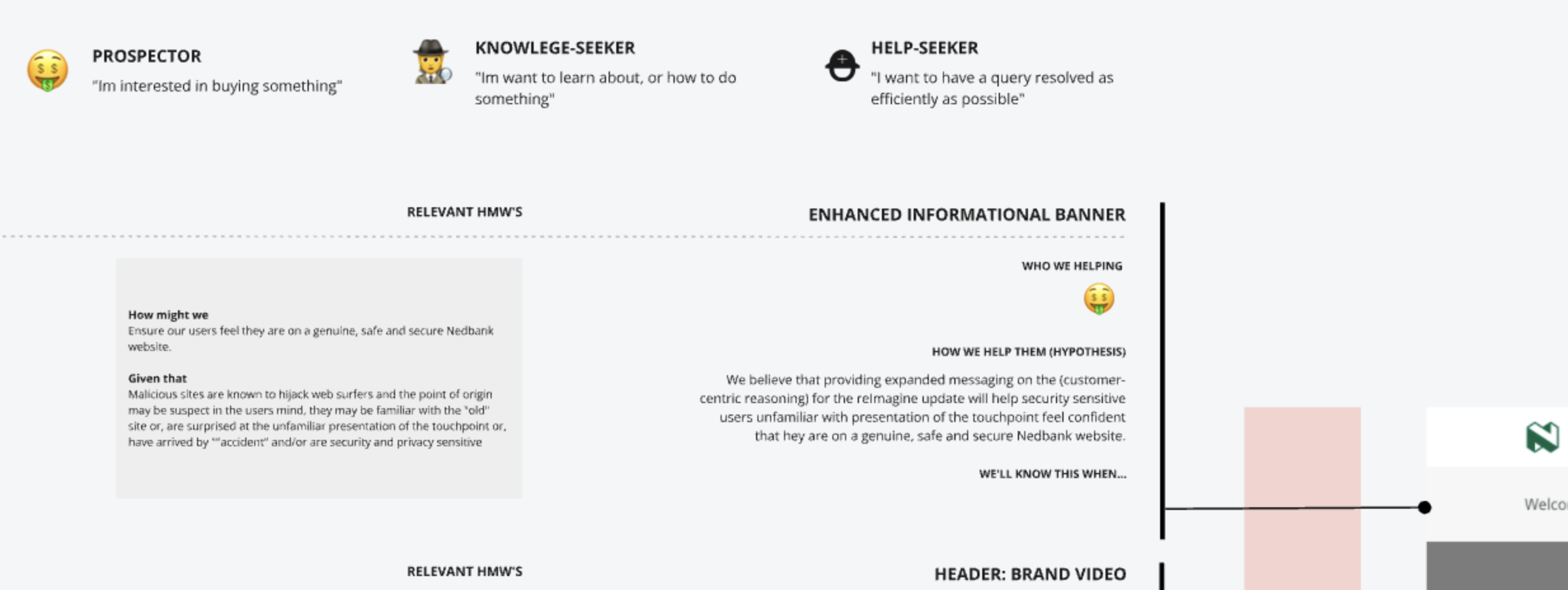
1. Start With User Needs & Context
Customer problems became the starting point for every initiative.
The team invested in research, behavioural analysis and customer insights to ensure that solutions addressed genuine customer needs rather than organisational assumptions. Content, products and services had to create customer value while delivering measurable business outcomes.
Design impact:
Customer-centred design
Jobs-to-be-done thinking
Evidence-based prioritisation
Outcome-driven KPIs
2. All Ideas Are Hypotheses To Be Tested
Rather than relying on opinions or hierarchy, every idea was treated as an experiment.
The team embraced MVP thinking, rapid prototyping, usability testing and data-driven validation. Decisions were based on evidence gathered from real customer behaviour.
Design impact:
Prototype-first culture
Continuous testing
A/B experimentation
Measurement-led improvements
3. Simplify For The Customer (And Us)
The team believed that true simplicity requires deliberate effort.
Complex customer journeys, confusing navigation and organisational silos were actively challenged and redesigned to reduce friction and improve usability.
Design impact:
Reduced cognitive load
Simplified journeys
Clearer navigation
Better service design alignment
4. Consistency (Not Uniformity) Helps Everyone
Consistency was viewed as a trust-building mechanism.
Customers should encounter familiar patterns, language and behaviours across journeys, while still allowing flexibility where different contexts required it.
Design impact:
Design system adoption
Shared interaction patterns
Consistent visual language
Omni-channel alignment
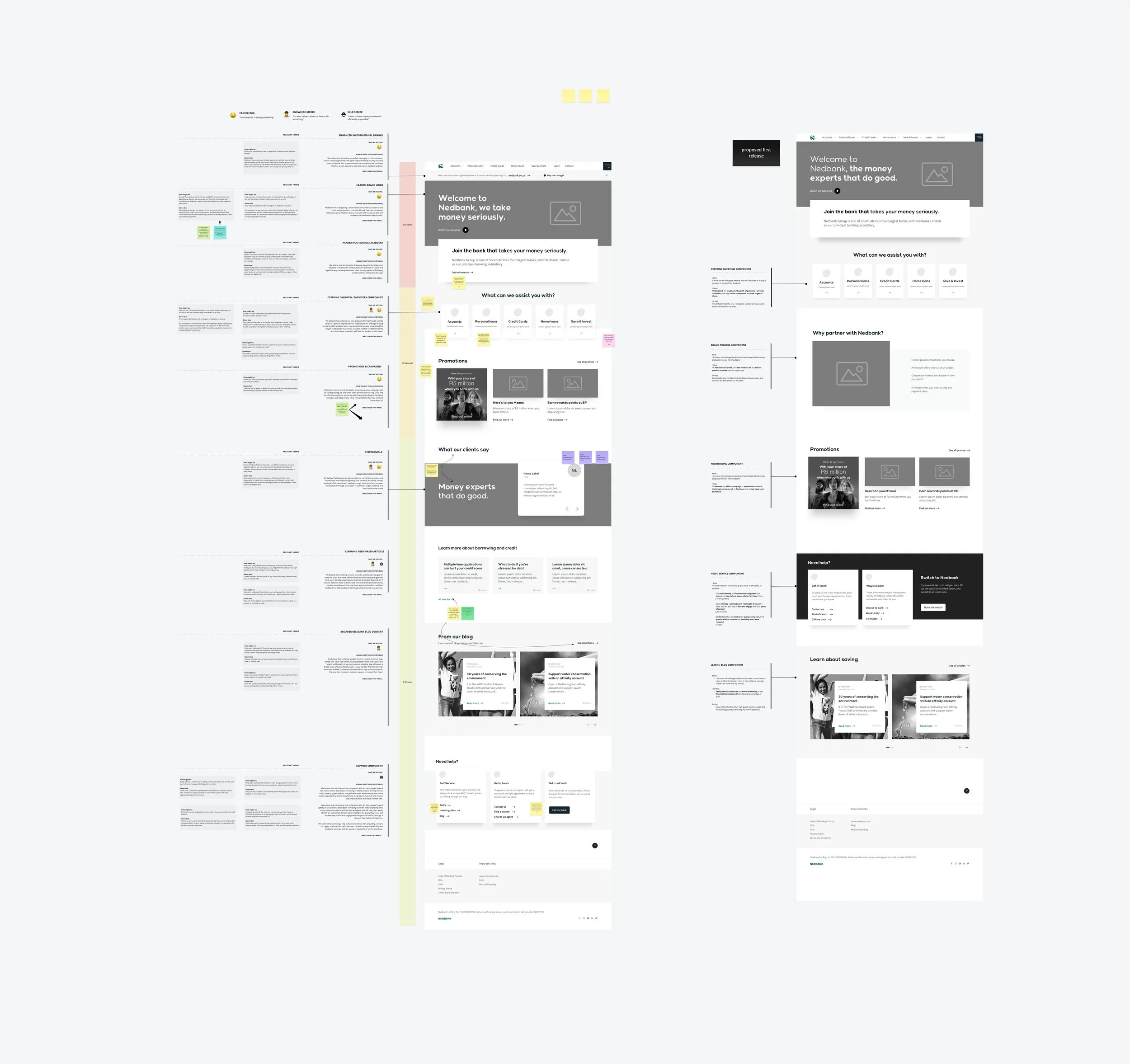
5. Build Building Blocks For Journeys, Not Pages
Perhaps the most influential design principle of the programme.
The team moved away from designing isolated webpages and instead focused on creating reusable components and journey building blocks that could support multiple customer scenarios.
Design impact:
Component-based architecture
Mobile-first design
Modular AEM implementation
Faster delivery through reuse
Scalable design systems
6. Ownership & Learning Drive Continuous Improvement
The website was treated as a living product rather than a completed project.
Teams were expected to measure, learn and optimise continuously while sharing insights across the organisation.
Design impact:
Product operating model
Lifecycle ownership
Customer journey management
Continuous optimisation culture
The Solution
Progressive Migration Instead of Big Bang Delivery
One of the most important strategic decisions was abandoning a traditional large-scale website replacement approach.
Instead, the programme adopted a framework built around:
Shape It
Test ideas through MVP delivery. Learn rapidly. Establish governance and ways of working.
Nail It
Refine experiences, improve conversion rates and standardise reusable components.
Scale It
Expand successful patterns and capabilities across the broader Nedbank digital ecosystem.
This reduced programme risk while unlocking business value earlier and more frequently.
Design & Technology Foundations
Need-Based Information Architecture
Rather than organising the website around internal product silos, the future architecture focused on customer goals.
Examples included:
Bank
Borrow
Save & Invest
This enabled customers to discover financial solutions based on needs rather than product knowledge.
Component-Based Design System
The programme aligned closely with the emerging Nedbank Design System and introduced:
Reusable UI components
Design tokens
Shared interaction patterns
Modular content structures
This accelerated delivery while maintaining consistency across experiences.
Adobe Experience Platform
The technology stack was modernised using Adobe Experience Manager and related Adobe tools to support:
Content management
Personalisation
Analytics
Optimisation
Journey delivery
The platform was designed for flexibility, scalability and future growth.
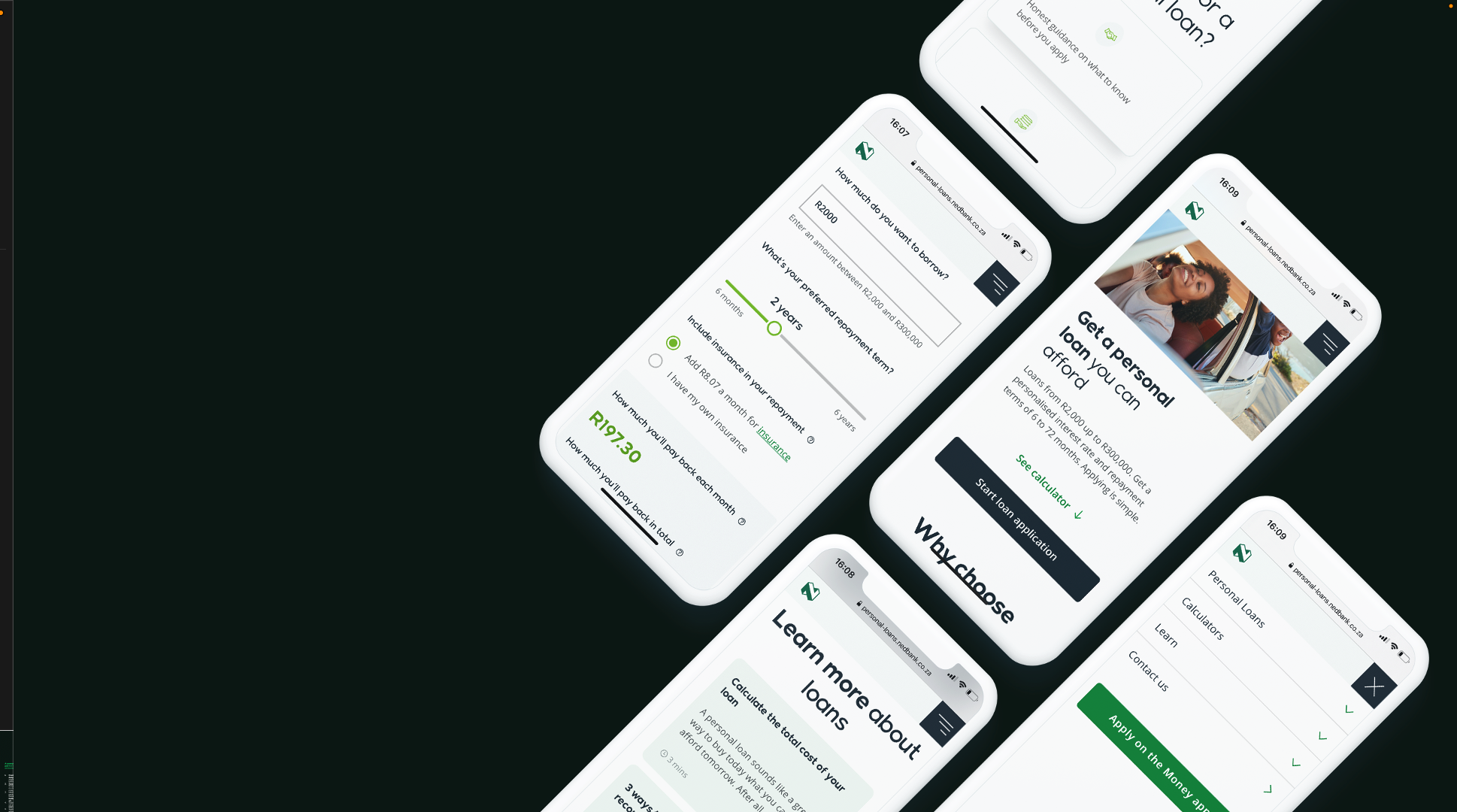
MVP 1: Personal Loans
The first MVP focused on the Personal Loans journey.
The objective was not simply to launch a new experience but to test the entire Reimagine operating model.
Key Goals
Improve Conversion
Determine whether the redesigned customer journey increased application completion rates.
Build Reusable Foundations
Create components, patterns and governance mechanisms that could support future journeys.
Validate New Ways of Working
Test the effectiveness of agile, cross-functional collaboration and continuous learning.
Measuring Success
A comprehensive measurement framework connected customer behaviour to business outcomes.
Metrics included:
Unique visitors
Organic search traffic
Return visitors
Bounce rates
Task completion
Lead generation
Form submissions
Conversion rates
Approval rates
Customer advocacy metrics
Personalisation effectiveness
This created a feedback loop that continuously informed future design decisions and backlog prioritisation.
Outcomes & Legacy
While the initial objective was to modernise Nedbank's public website, Reimagine ultimately established a blueprint for digital product development across the organisation.
The programme introduced:
Product-led thinking
Customer-centred design
Design systems at scale
Agile digital delivery
Continuous experimentation
Data-driven decision-making
Journey ownership models
Experience measurement frameworks
More importantly, it transformed how digital experiences were conceived, delivered and improved across Nedbank.
Key Takeaway
Reimagine DOTCOZA was not a website redesign project.
It was a transformation of culture, operating model, design practice and digital delivery capabilities.
By combining customer-centred design, experimentation, design systems, progressive delivery and continuous measurement, the initiative established a new foundation for how Nedbank creates digital experiences.
Its enduring principle remains:
Build journeys, not pages. Learn continuously. Improve relentlessly.