
The Future of Design Isn’t AI. It’s Taste.
I arrived in San Francisco for Config 2026 expecting to learn about AI. Like everyone else, I wanted to see what Figma would unveil next. New capabilities. New workflows. New ways to design, prototype and build products faster than ever before.
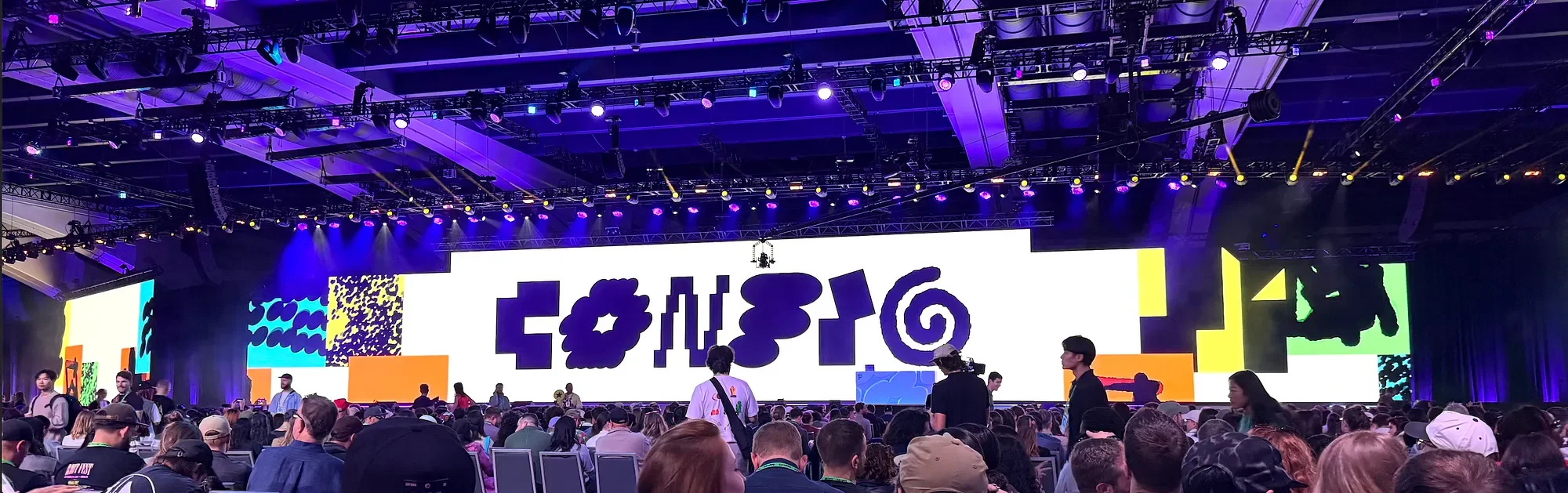
Config 2026 - San Fransisco
Walking through Moscone Center, it was impossible to ignore the excitement. Designers were discussing AI agents over coffee. Developers were debating code generation. Product teams were exploring new workflows that would have seemed impossible just a year ago.
By the end of the conference, however, I realised I had been asking the wrong question.
The question isn’t whether AI will change design.
It already has.
The real question is this:
What becomes valuable when everyone can create?
That, for me, was the real story of Config 2026.
When Creation Becomes Abundant
Every major technology shift changes what we value.
When desktop publishing arrived, creating beautiful documents became easier.
When digital cameras replaced film, taking photographs became virtually free.
When the internet connected the world, information became abundant.
Each of these innovations democratised something that had previously been scarce. As they did, the source of value shifted.
Today, AI is doing the same for product creation.
Generating interfaces, writing code, creating illustrations, producing animations and building prototypes are becoming dramatically easier. What once took hours can now take minutes. What once required specialist expertise is increasingly available to anyone with the right tools.
This is an extraordinary leap forward.
But it also changes where value is created.
If everyone can generate ideas, layouts and code, then producing more is no longer the competitive advantage.
Choosing the right one is.
The One Thing AI Still Doesn’t Have
Throughout Config, I kept coming back to a simple idea.
AI can create almost anything. It cannot know what is worth creating.
That is the role of taste.
Taste is often misunderstood as personal preference or aesthetics. It is neither.
Taste is judgement.
It is the ability to recognise quality before it becomes obvious. It is knowing when something feels intuitive rather than merely functional. It is understanding that great products are not defined by how much they include, but by what they intentionally leave out.
Taste is knowing when to simplify.
When to challenge the brief instead of accepting it.
When to say no.
When to recognise that a product solves the wrong problem, even if it has been beautifully designed.
These are not decisions AI makes.
They come from experience, curiosity, empathy and a deep understanding of people.
AI can generate hundreds of alternatives in seconds.
It cannot tell you which one your customer will trust.
It cannot understand the emotional weight of a brand built over decades.
It cannot recognise the subtle difference between a product that works and a product people love.
As AI becomes better at generating, human judgement becomes more valuable.
Creation becomes abundant.
Taste becomes scarce.
And scarcity creates value.
Config Was About More Than New Features
Most conference recaps focus on the announcements.
New AI capabilities.
Motion.
Code.
Visual effects.
Developer workflows.
They are all impressive.
But I don’t believe the individual features were the biggest story.
What struck me was the direction they were pointing.
For years, we’ve separated product creation into disciplines. Designers worked in one environment. Developers worked in another. Motion lived somewhere else. Content was created elsewhere. AI was treated as an external assistant.
Config challenged that model.
The canvas is no longer just a place to design interfaces.
It is becoming the environment where products are imagined, refined and built.
Code is no longer something that happens after design.
Motion is no longer decoration added at the end.
AI is no longer a bolt-on capability.
Everything is beginning to converge into a single creative workspace.
That changes far more than the tools we use.
It changes how teams work together.
The conversation shifts from handovers to collaboration.
From sequential delivery to continuous creation.
From isolated disciplines to shared outcomes.
That is a profound organisational shift.
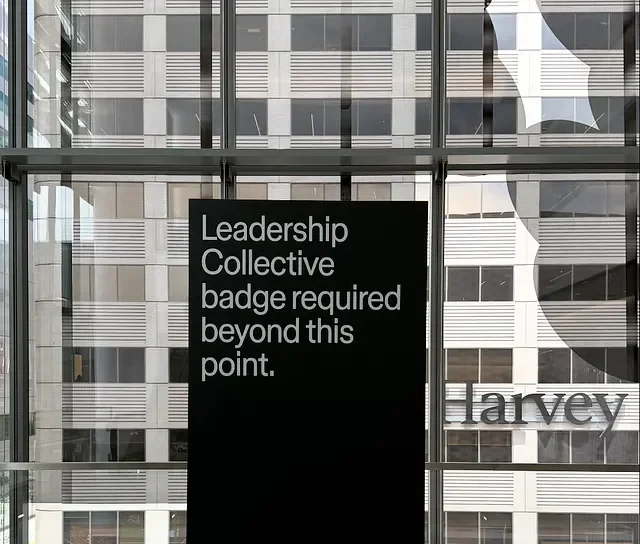
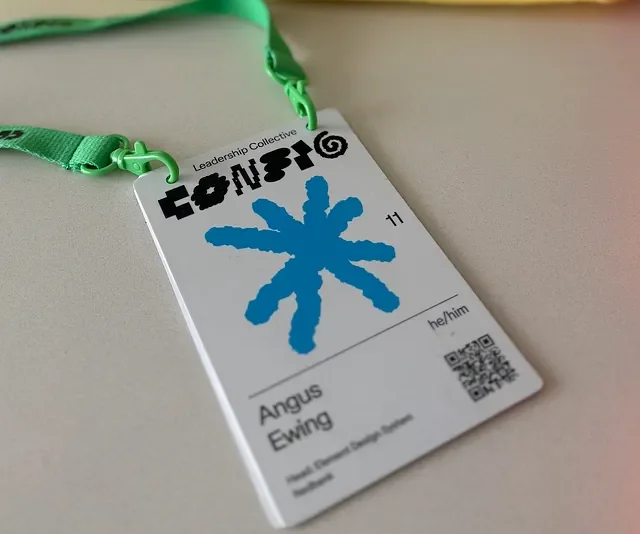
Being part of the Leadership Collective was a masive privilage.
Rethinking the Role of Design Systems
As someone leading an enterprise Design System, this was perhaps the most exciting implication of Config.
For years, Design Systems have been measured by the quality of their components, documentation and governance.
Those things remain important.
But they are no longer enough.
In an AI-native world, a Design System becomes something much more significant.
It becomes the collective intelligence of an organisation.
It captures not only reusable components, but reusable decisions.
It teaches accessibility.
It encodes brand principles.
It explains engineering constraints.
It reinforces product thinking.
It preserves organisational knowledge.
Most importantly, it becomes the source of truth that both humans and AI can learn from.
That is a significant evolution.
The Design System is no longer simply helping teams build consistent products.
It is teaching people — and increasingly intelligent agents — what good looks like.
The organisations that invest in this knowledge will move faster, not because AI is doing the work, but because AI understands how their organisation works.
From User Experience to Agent Experience
I’ve written previously about the shift from User Experience to Agent Experience (AX).
Config strengthened my conviction that this shift is already underway.
Our products are no longer designed exclusively for human interaction.
Increasingly, we are designing ecosystems where humans and AI collaborate.
The designer’s role expands beyond creating interfaces.
We define behaviours.
Shape decision-making.
Design workflows.
Build trust.
Create the guardrails that enable intelligent systems to act responsibly.
Our job becomes less about producing screens and more about designing systems that continuously learn and improve.
That is a different discipline entirely.
The New Leadership Challenge
If AI can generate interfaces, write code and automate production, then what should our teams spend their time doing?
This is the question every design leader should be asking.
The answer isn’t producing more.
It’s thinking better.
The skills that will define the next generation of design leaders aren’t software proficiency or prompt engineering alone.
They are curiosity.
Critical thinking.
Systems thinking.
Facilitation.
Ethics.
Storytelling.
Business acumen.
Most importantly, they are judgement.
The designer who competes with AI on speed will lose.
The designer who uses AI to explore possibilities and then applies experience, context and taste to choose the right direction becomes exponentially more valuable.
A Different Way to Measure Success
Leaving San Francisco, I wasn’t thinking about which feature would save me the most time.
I was thinking about what our teams should do with the time AI gives back to us.
Perhaps that’s the opportunity in front of us.
Not to produce more screens.
Not to generate more ideas.
Not to build more prototypes.
But to ask better questions.
To solve more meaningful problems.
To raise the quality of our thinking.
Because the future of design won’t be defined by who has access to AI.
Everyone will.
It will be defined by who has the judgement to guide it.
Config 2026 reminded me that technology has always changed the way we work.
But it has never replaced the qualities that make great designers, product thinkers and leaders exceptional.
Curiosity.
Empathy.
Vision.
And above all else, taste.
In a world where AI can create almost anything, the ability to recognise what is truly worth building may become the most valuable skill of all.
Disclaimer: The views expressed in this article are solely my own and are provided in a personal capacity. They do not represent the views, opinions, or positions of my employer or any affiliated organisations.
If you enjoyed this article you might want to read this one too:
The ROI of Design Systems: Turning Figma Components Into Business Value
